The journey of learning, a fundamental aspect of both human experience and artificial intelligence (AI), presents a fascinating intersection of psychology and technology. Understanding the psychological foundations of learning not only provides insights into human intelligence but also informs the development of more advanced and intuitive AI systems. This exploration begins with the intricate processes of learning within the human brain, extending from early childhood to adulthood.
The human brain, a marvel of nature, is the epicenter of learning. Its structure, comprising billions of neurons interconnected through synapses, is the foundation upon which all learning and knowledge are built. Neuroplasticity, the brain’s ability to reorganize itself by forming new neural connections, lies at the heart of learning. This plasticity allows the brain to adapt to new information, experiences, and environments, making learning a continuous and dynamic process.
At the neuronal level, learning involves changes in the strength of synaptic connections, a phenomenon known as synaptic plasticity. This process is crucial in memory formation and retention, enabling the brain to store and recall information. The hippocampus, a critical region for learning and memory, plays a significant role in processing and consolidating new information, making it an essential area of study in both neuroscience and AI.
Learning in childhood is a critical phase of cognitive development. During these early years, the brain exhibits a remarkable capacity for learning and adaptation, a phenomenon often referred to as the ‘critical period’. This period is characterized by rapid growth and development of neural networks, which shape a child’s cognitive abilities, language development, and understanding of the world.
Children learn through a combination of innate abilities and environmental interactions. They acquire knowledge and skills through play, exploration, and social interactions, which contribute significantly to their intellectual and emotional development. This phase of learning is not just about acquiring information; it’s about developing the cognitive frameworks and thought processes that will govern future learning and problem-solving.
Understanding the mechanisms of learning in childhood provides valuable insights for AI development. By mimicking these natural processes, AI systems can be designed to learn more effectively and adaptively, enhancing their ability to interact with and understand the world around them.
The learning process in adulthood presents a different landscape compared to childhood, characterized by both challenges and opportunities. While the brain’s plasticity decreases with age, adults possess certain advantages in learning that stem from a rich repository of experiences and a developed capacity for abstract thinking.
Adult learning is often driven by specific goals or needs, such as professional development, personal interest, or adapting to changes in one’s environment. Unlike the broad and exploratory learning of childhood, adult learning tends to be more focused and applied. Adults are typically more self-directed in their learning pursuits, bringing a wealth of prior knowledge and experience to new learning situations. This background often allows for a deeper understanding and contextualization of new information.
However, the adult brain faces certain limitations. Neuroplasticity, while still present, is less pronounced than in children. This reduced plasticity means that learning new skills or changing established patterns of thinking can be more challenging. Despite this, the adult brain compensates through its ability to connect new information with existing knowledge, a process known as associative learning.
The study of adult learning provides valuable insights into the resilience and adaptability of the human brain. In the context of AI, understanding how adults learn can inform the development of AI systems that are capable of continuous learning and adaptation. By incorporating principles of adult learning, such as goal-oriented tasks and associative learning, AI systems can be designed to be more efficient and effective in real-world applications.
Transitioning from the psychological underpinnings of human learning, we delve into the domain of computerized learning and machine learning (ML) — the cornerstone of modern Artificial Intelligence (AI). This shift represents a significant evolution from biological to digital realms, where learning transcends the boundaries of the human mind and enters the realm of algorithms and data. In this section, we explore the various facets of computerized learning, its types, and how they parallel yet diverge from human learning processes.
Computerized learning in AI encompasses a range of methodologies, each tailored to specific types of tasks and objectives. These methods demonstrate the versatility and adaptability of AI systems in learning from data, experiences, and even their interactions with the environment.
Each of these types of computerized learning plays a pivotal role in the development and functionality of AI systems. They not only highlight the diversity in AI learning approaches but also draw parallels to the various ways humans learn, adapt, and process information.
The concepts of input and output are fundamental in machine learning, forming the basis upon which these systems learn and function. In ML, input refers to the data or information that is fed into the system, while output is the prediction, decision, or action produced by the model based on that input.
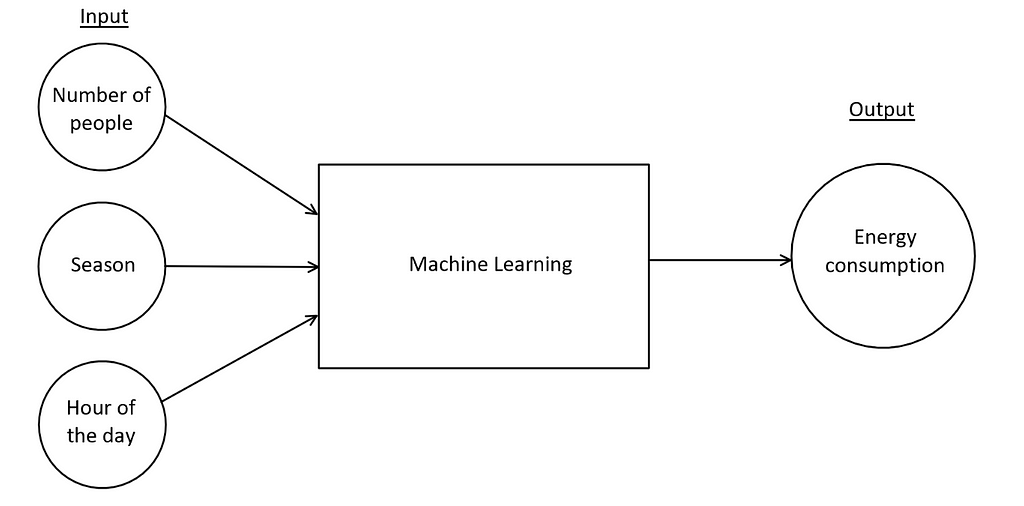
Understanding the relationship between input and output is key in designing effective ML systems. This relationship determines how the system will be trained, the type of algorithm used, and the expected performance of the model in real-world scenarios.
Online and offline learning represent two different approaches to training machine learning models, each with its unique applications and advantages.
Both online and offline learning approaches have their place in AI, depending on the specific requirements and constraints of the application. While online learning offers adaptability, offline learning provides stability and consistency in model performance.
In the realm of Artificial Intelligence (AI), learning models are the frameworks that guide how an AI system processes information and makes decisions. These models vary greatly, each suited to different types of problems and data. Understanding these models is key to appreciating how AI mimics human learning, adapts to new information, and solves complex problems. We will explore several prominent learning models that have significantly contributed to advancements in AI.
Supervised learning is one of the most widely used learning models in AI. This model operates on the principle of learning from labeled data — where the input data is paired with the correct output. The goal of supervised learning is for the AI system to learn a mapping function from the input to the output, so that when it is given new input data, it can accurately predict the corresponding output.
Characteristics of Supervised Learning:
Training Process:
Types of Problems Solved:
Supervised learning’s strength lies in its ability to learn complex patterns and make predictions based on its learning, making it a powerful tool in AI for a wide range of applications. However, its reliance on large labeled datasets can be a limitation, as obtaining such data can be time-consuming and costly.
Unsupervised learning, in contrast to supervised learning, involves AI systems that learn from data without any labeled responses or outputs. The focus here is on uncovering hidden patterns and structures within the data itself, without any external guidance or correction.
Characteristics of Unsupervised Learning:
Common Techniques:
Unsupervised learning’s ability to discover hidden structures in data makes it a crucial tool for data mining and big data analytics, where the sheer volume and complexity of data make manual labeling impractical or impossible.
Semi-supervised learning sits between supervised and unsupervised learning. It uses both labeled and unlabeled data for training, typically a small amount of labeled data with a large amount of unlabeled data. This model leverages the advantages of both supervised and unsupervised learning.
Characteristics of Semi-Supervised Learning:
Training Process:
Semi-supervised learning is valuable in scenarios where some data can be labeled but adding more labels is cost-prohibitive or impractical.
Self-supervised learning is a newer approach in machine learning, where the system generates its own labels from the input data. It is essentially a form of supervised learning but without human-annotated labels.
Characteristics of Self-Supervised Learning:
Examples and Applications:
Self-supervised learning is an exciting area of AI, as it promises to leverage the vast amounts of unlabeled data available, making AI systems more scalable and efficient in learning.
Reinforcement Learning (RL) is a distinct and dynamic type of learning model in AI, where learning occurs through interactions with an environment. In RL, an AI agent learns to make decisions by performing actions and receiving feedback in the form of rewards or penalties. This model is inspired by behavioral psychology and how living beings learn from the consequences of their actions.
Characteristics of Reinforcement Learning:
Training Process:
Applications:
Reinforcement learning represents a powerful approach in AI, enabling systems to learn optimal behaviors in complex, dynamic environments through trial and error and goal-oriented learning.
The exploration of learning in AI systems, from its psychological foundations to advanced learning models, reveals a rich tapestry of methodologies and approaches. These learning models, each with its unique strengths and applications, underscore the versatility and depth of AI.
Starting from the basics of how humans learn and develop cognitively, we ventured into the realm of computerized learning, uncovering various methods by which machines interpret and process information. We saw how models like supervised and unsupervised learning parallel human learning processes, while others like reinforcement learning take a unique approach, inspired by behavioral psychology.
As AI continues to evolve, the importance of understanding and enhancing these learning models becomes ever more crucial. The future of AI learning is not just about replicating human intelligence but also about surpassing it in efficiency, scalability, and adaptability. This journey into the world of AI learning highlights the intersection of technology and human cognition, a nexus that promises to reshape our understanding of intelligence, both artificial and natural.
The evolution of learning in AI is an ongoing narrative, marked by continuous advancements and discoveries. As we forge ahead, the potential for AI to transform industries, augment human capabilities, and solve complex global challenges remains a compelling and ever-present prospect.