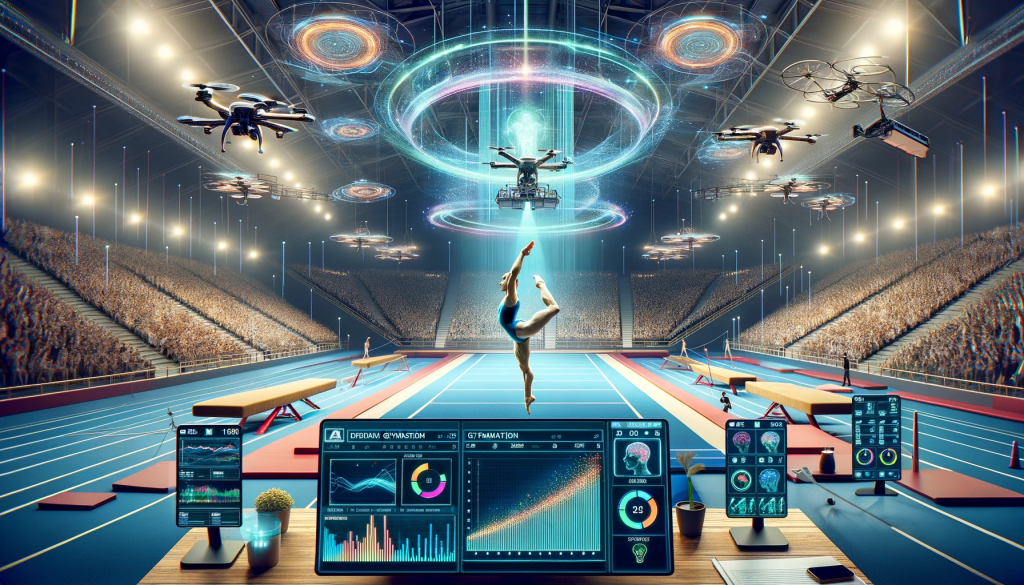
In the world of competitive gymnastics, where the precision of a toe point or the angle of a handstand can be the difference between podium glory and heartbreak, the margin for error is razor-thin. The introduction of Artificial Intelligence (AI) into this high-stakes arena is not just innovative; it’s revolutionary. With the adoption of the Judging Support System (JSS) by Olympic-level gymnastic contests, AI is set to transform the way performances are evaluated, offering a new layer of fairness and precision to the sport.
Gymnastics, with its complex routines and nuanced scoring system, presents a unique challenge for both athletes and judges. The subjective nature of scoring, based on human observation, has always left room for debate. However, the integration of AI into gymnastics judging is beginning to change this narrative.
The 2023 World Artistic Gymnastics Championships in Antwerp marked a significant milestone as judges utilized JSS, an AI-based video evaluation system developed by Fujitsu, for the first time in competitions across the full range of gymnastics equipment. This move towards AI-assisted judging represents a pivotal shift in the sport’s approach to fairness, accuracy, and unbiased evaluation.
The JSS system is a marvel of modern technology, designed to assist judges in evaluating gymnastic performances with unprecedented accuracy. Here’s a closer look at how it operates:
The current rules limit the use of JSS to specific scenarios, such as score challenges or discrepancies among judges. However, the system’s success at the World Championships has sparked discussions about its potential use in future Olympic Games and other major competitions.
The integration of AI systems like JSS in gymnastics judging presents a fascinating juxtaposition between technological precision and human intuition. While human judges bring years of experience and a nuanced understanding of the sport’s artistic elements, AI offers an unbiased assessment based solely on technical execution. This blend of human and machine evaluation has the potential to elevate the fairness of competitions, ensuring that scores reflect an athlete’s performance with greater accuracy.
However, the question remains: Can AI truly replicate the subtlety of human judgment? Gymnastics is celebrated not only for its technical difficulty but also for its artistic expression, something that is inherently subjective and, currently, beyond the full grasp of AI. As such, AI’s role is best seen as complementary, providing a data-driven foundation upon which human judges can overlay their expertise, particularly in assessing elements like artistry and presentation.
The use of AI in gymnastics is just one example of how technology is being employed to enhance fairness and performance in sports. Across various disciplines, AI is making significant inroads:
These examples illustrate AI’s vast potential to impact sports, from improving the accuracy of competition judging to enhancing athlete performance and optimizing game strategies. As AI technology continues to evolve, its applications within the sports industry are poised to expand, promising a future where technology and human talent converge to push the boundaries of athletic achievement.
As AI systems like JSS become more integrated into sports, several challenges and ethical considerations emerge. One primary concern is the potential for reliance on technology to diminish the value of human judgment and intuition, which have long been central to sports. Furthermore, the deployment of AI raises questions about fairness, particularly in ensuring that the technology does not inadvertently introduce bias based on the data it has been trained on.
Data Privacy and Security: The use of extensive athlete data for AI training and analysis also brings up issues of privacy and security. Ensuring that athletes’ personal and performance data are protected is paramount, as is transparently communicating how this data is used.
Accessibility and Equity: There’s also the challenge of ensuring equitable access to AI technologies. In gymnastics, for instance, not all countries or gymnastic programs may have the resources to implement systems like JSS, potentially leading to disparities in how athletes are trained and evaluated.
The future of AI in gymnastics looks promising, with potential applications extending far beyond judging support. AI could revolutionize training, offering gymnasts personalized feedback on their routines and helping them optimize performance in ways previously unimaginable. Moreover, AI’s predictive capabilities might be used to assess injury risks, guiding athletes in preventing common gymnastic injuries through tailored conditioning programs.
As AI technology continues to advance, its applications could extend to choreographing routines that maximize scoring potential based on historical performance data, further blending the art and science of the sport.
The integration of AI into gymnastics represents a groundbreaking shift towards enhancing fairness, accuracy, and performance in the sport. While challenges and ethical considerations remain, the potential benefits of AI in refining the judging process and supporting athletes’ training efforts are immense. As we look to the future, the key will be finding the right balance between leveraging AI’s capabilities and preserving the human elements that make sports so compelling.
The journey of AI in gymnastics is just beginning, but its impact is set to resonate throughout the sporting world. By continuing to explore and address the challenges of integrating AI, the global sports community can harness this powerful technology to not only improve competitive fairness but also to unlock new levels of athletic achievement. In doing so, AI will not replace the human spirit at the heart of sports but rather amplify it, pushing athletes to achieve their true potential.